It is time to pack up and seed the send back, what I grew out for the EFN (Experimental Farm Network)
BUSHITENO (Grif 1490) cowpea from Sri Lanka 3 pounds 10 oz
Plum Lemon tomato (Lycopersicon lycopersicum) (PI 64753)
Phaseolus coccineus
( Black Coat Scarlet Runner Bean )Pollinated by bumblebees) I had to hand polinate
Pea (Dwarf gray sugar) Low yeild
The grain seed that failed to grow, because of too much rain were.
Belezian cranbe sprout
Faro Quinoa (Pedros select)
Camelina Sativa L.Crantz
Showing posts with label EFN seed. Show all posts
Showing posts with label EFN seed. Show all posts
Monday, October 26, 2015

Thursday, July 30, 2015
Garden update
It is so exciting to see the first sign of your watermelon beginning to grow. You start feeling like an parent waiting on a child to be born. Day after day you watch it grow. The Carmen watermelon in the first photo is the first in my garden to start forming. Now it is the size of a cantaloupe. It has the potential of 24 pounds at full harvest weight. I think the weather plays a part in this taking so long to develop. The person I purchased the original melon from last year. Already has melons for sale.I bought one and save seed from it in case mine does not mature.
 In another part of the garden I have 2 more plants with 2 smaller melons. and a new tiny one forming. This area is more protected from wind by the house bush and trees. It is a clear open spot in full sun. Yet a micro environment of protection. The top one is in a open field with tress behind (North) Both areas are south facing. Yet you can see 2 weeks growing difference in them.
 The next melon I planted in a few spots. Only has melons in the same open area as the top watermelon. All the plants are prolific in flowers. This plant has 3 bigger than soft ball size Karari melons. When they mature the will have red added to there skin color. The seed is from India. The melon is said to grow to the size of a honeydew. Taste maybe sweet and spicy. It is said to be a 70 day melon too. It is my first time growing it. So will have to update on it.
 The BUSHITENO (Grif 1490) cowpea from Sri Lanka have taken over the fence in vine.
They were slow to start. But now that we have sunshine heat and less rain. They are forming beans.
 The Oca in this area is doing well. The Yacon is surviving the transplant from a container to the ground. It could no longer handle the amount of rain we had.
 The plumb Lemon tomato Is forming well. The must be a mix up in the seed sent. The plant next to it is not a plumb lemon. It is more orange. Where Yellow should be the color. It also does not have a point like a lemon at the bottom.


They were slow to start. But now that we have sunshine heat and less rain. They are forming beans.


Monday, July 20, 2015
Harvesting Cranberry beans and Dwarf Grey sugar peas
I am saving seed from both of these plants. So this is more of a how to collect seed to regrow them both. But the Cranberry beans could just be saved to eat as a dry bean in this form too. could have just picked the cranberry bean at early stage and cooked it like green beans. The same for the peas. They are both a 60-65 day from seed to harvest plant. The cranberry bean needs no stakes. The dwarf gray needs a short 3-4 fence to lean on. Or it will fall in wind or rain.
Yesterday I replanted the cranberry beans. I have about 14 pea seeds in water. I am soaking them about 24 hours to help break there dormancy. They can take 10 days to 2 weeks to sprout. They have a hard seed coating. Where the Cranberry beans were sprouting in the pod at the time of harvest. That made me wonder if they would be good to save for seed. I did not want to chance. But I will save some to see if the will grow next spring. But this way I get 2 crops. ! for seed the other for food and seed.
Monday, July 13, 2015
The Experimental Farm Network seeds of 2015
 |
| Phaseolus coccineus ( Black Coat Scarlet Runner Bean ) |
 |
| Pea (Dwarf gray sugar) |
 |
| . BUSHITENO (Grif 1490) cowpea from Sri Lanka |
 |
| Faro Quinoa (Pedros select) |
 |
| Belezian cranbe |
Plum Lemon (Lycopersicon lycopersicum) (PI 64753)
Heirloom Tomato This plant was fast to start. All seeds germinated. Will add photos and more info soon.
Thursday, July 9, 2015
Phaseolus coccineus ( Black Coat Scarlet Runner Bean )
I finally have beans growing on the vines. The Black Coat Scarlet Runner Beans are beautiful! many blooms. But with all the rain this year, in Missouri. There was not much chance to have bee's or humming birds get this plant pollinated. They have to go deep into the plant to find the anthers and stamen. It would be difficult to hand pollinate. But I may try a small paint brush. When we have another dry day. I should have kept track of temp and rain amounts. But I can just look them up. Today right now it is raining again. 71f & 83% humidity. High for the day was 77f.


Tuesday, June 30, 2015
Growing Oca in summer heat
This is an experiment to see if
1. Oca can grow in my climate
2. Be planted late in the season
1. Oca can grow in my climate
2. Be planted late in the season
The Oca has been in the 4 inch pots for a week now.
They were started indoors.Then places in filtered shade a few days.
They were started indoors.Then places in filtered shade a few days.

I have place them in the sun for a little bit yesterday. temps were 84° | 64° no rain. Some showed signs that they needed back in the shade. I am hardening them off, as if it were still spring.
This would have been easier if I could have started them inside in March.
But this is summer. So I have to re-think how to get them to adapt to heat.
 | |
| (Oc-14x11x16) (OC-14-1x15x14) ( OC-14-1x14x8) 2x ( | OC-14-1x16x14) ( OC-14-1x10x10) |
 |
| Oc14-2x8x5 |
 |
| OC14 1x11x16 |
 |
| OC14- 1x14x 8 |
 |
| The 6 outside of the potato garden |

I still have 13 to plant in the ground.

I will post more photos soon.
Wednesday, June 24, 2015
2 days in soil Oca has roots
I planted the Oca in the 4 inch pots on June 22 I checked plant number OC 14-1x16x14 red t has roots started.This tuber was fully covered with potting soil.
 Where some of the others were placed with some of the growing out of the soil.
 I wanted to compare the difference. To see if the stem would green up and form leaves. Or just send up new shoots. I have left the tubers attached to all stems that were already growing, when I received them. The soil is moist and watered from the bottom. I did add some water to the top after planting them. As it did not wick up fast enough to moisten the soil. I have a grow light above them and south window. I will place them in so Sun outside tomorrow if we have a clear day. Today was no rain for the first time in a while. I should start writing and recording every day. But it takes a bit of discipline to form a habit.
I will list now what I have received with links to more info to refer back to.
Black flat has
 3 tubers where all the others have 2
1.(3) OC-14-1x14x8
2. Oc-14x11x16
3. OC-14-2x08x05
4. OC-14-1x10x15
5. OC-14-1x15x14
6. OC-LG-13-2x5 large
7. Oc14-1x23x8
Container 2
8. OC-14-1x13x8
9. OC-14-1x23x8
10. OC-LG-13-2x2
 Container 3
11. OC-14-1x10x10
12. OC-14-1x15x2
13. OC-14-1x16x14 Red

Link to more info
https://www.cultivariable.com/instructions/how-to-grow-oca/
Growing details
Where to plant
Oca prefers a cool, maritime climate, where it should be planted in full sun. Although oca can tolerate some drought, best yields are achieved with plenty of water. Oca will do better in partial shade where temperatures frequently exceed 80 degrees F. With some shade, oca may be able to tolerate temperatures up to 100F, at least for short periods of time. Low spots, protected from wind, that stay damp but don’t pool are particularly good places to grow oca. Almost any plot of decent garden soil will suffice. Oca prefers moderately acidic soils (pH 5.5 to 7) and will tolerate very acidic soil
It is best not to plant Oca, potatoes, and Ulluco in the same ground (without rotating to other crops first) because they have some common diseases.
Plant whole tubers and seed pieces about 2-3″ deep In-row spacing of 18 inches works very well. 48″ row spacing will leave a comfortable walkway. 36″ between rows will usually leave just a little walking space in between. 24″ between rows will form a dense, unbroken canopy.
Note: Dormancy is similar to potato and runs anywhere from a few weeks to a few months, with most clocking in at about 14 weeks. Cold storage can extend the dormancy period greatly - up to a year in some varieties.


I will list now what I have received with links to more info to refer back to.
Black flat has

1.(3) OC-14-1x14x8
2. Oc-14x11x16
3. OC-14-2x08x05
4. OC-14-1x10x15
5. OC-14-1x15x14
6. OC-LG-13-2x5 large
7. Oc14-1x23x8
Container 2
8. OC-14-1x13x8
9. OC-14-1x23x8
10. OC-LG-13-2x2

11. OC-14-1x10x10
12. OC-14-1x15x2
13. OC-14-1x16x14 Red
Link to more info
https://www.cultivariable.com/instructions/how-to-grow-oca/
Growing details
Where to plant
Oca prefers a cool, maritime climate, where it should be planted in full sun. Although oca can tolerate some drought, best yields are achieved with plenty of water. Oca will do better in partial shade where temperatures frequently exceed 80 degrees F. With some shade, oca may be able to tolerate temperatures up to 100F, at least for short periods of time. Low spots, protected from wind, that stay damp but don’t pool are particularly good places to grow oca. Almost any plot of decent garden soil will suffice. Oca prefers moderately acidic soils (pH 5.5 to 7) and will tolerate very acidic soil
It is best not to plant Oca, potatoes, and Ulluco in the same ground (without rotating to other crops first) because they have some common diseases.
Plant whole tubers and seed pieces about 2-3″ deep In-row spacing of 18 inches works very well. 48″ row spacing will leave a comfortable walkway. 36″ between rows will usually leave just a little walking space in between. 24″ between rows will form a dense, unbroken canopy.
Note: Dormancy is similar to potato and runs anywhere from a few weeks to a few months, with most clocking in at about 14 weeks. Cold storage can extend the dormancy period greatly - up to a year in some varieties.
Monday, June 22, 2015
Sneak peak of Yukon golld potatoes and starting Oca tubers
I am so excited to receive the Oca tubers.They need to be planted about 3 inches deep. But here in Missouri we have had allot of rain. Now temps are up in the 90f. These tubers many not be happy with that. So I am starting them in 4inch containers. Once I get some roots and growth on top. I will place them in the garden. It will not be till fall that tubers form beneath the plant. So I may have a chance to still get a harvest. This is an experiment to see if they will grow in my area. They are normally grown like potatoes in the Andie's. (South America)
High temperatures may affect the plants. That area is a short day area and I am in a neutral day area. The hard part will be to get them to Nov or Dec for harvest. But I will do my best.

Oca (Oxalis tuberosa ) Known as the New Zealand Yam
High temperatures may affect the plants. That area is a short day area and I am in a neutral day area. The hard part will be to get them to Nov or Dec for harvest. But I will do my best.

Monday, June 15, 2015
Pea (Dwarf gray sugar)
A beautiful small flower will be found on this plant.

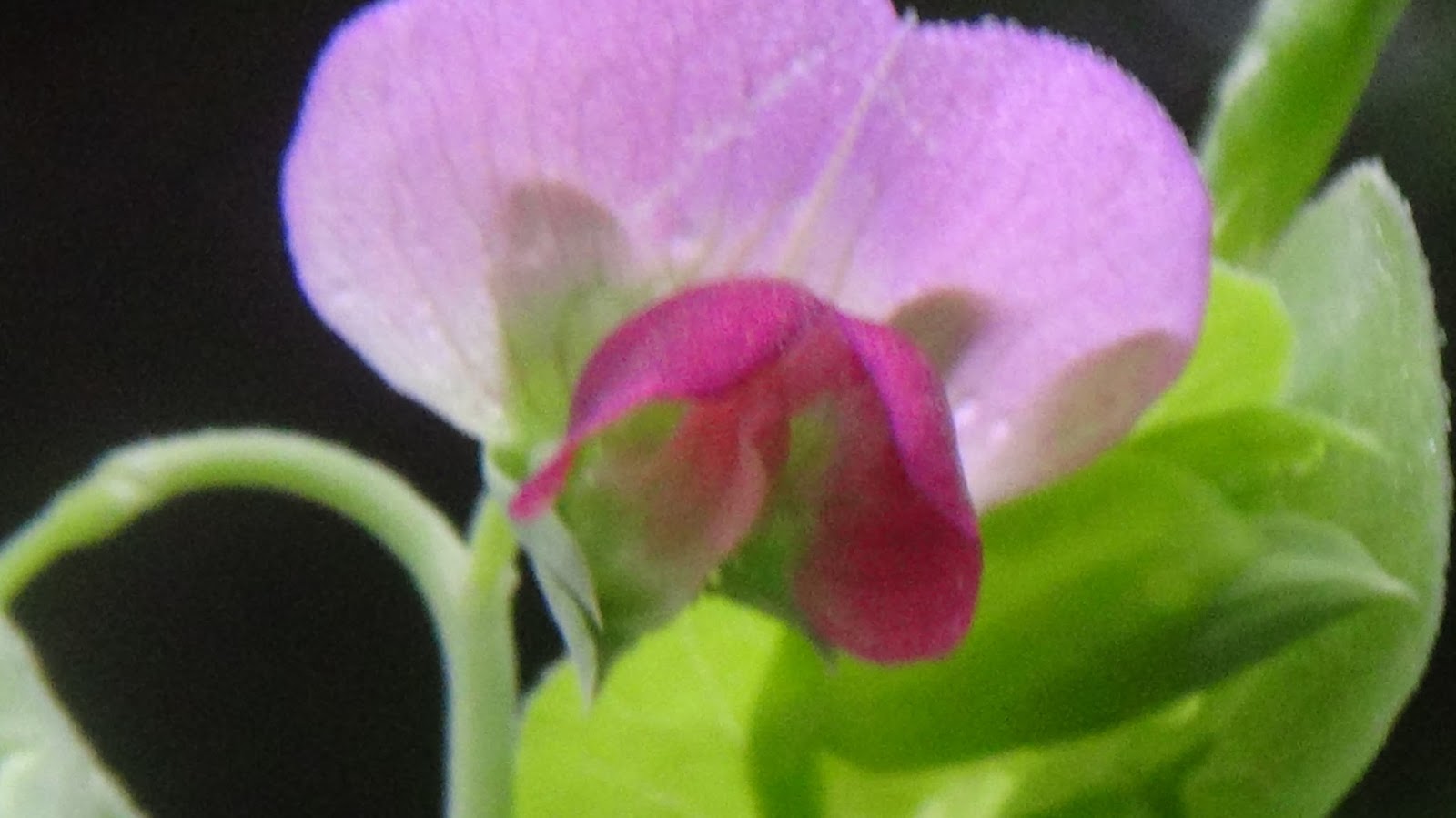


They are said to have purple bi-colored blossoms and leaves. Shoots are used as garnishes and in salad mixes, Small snow pea pods avg. 2½" long. But to me they look more Pink to purple in color range. The leaves remind me me of butterfly wings. But with out lack of sun and too much rain. This could account for the color difference.
Sow 1-1 1/2" apart 1/2-1" deep germinate in 7-14 days
28" vines are said to be grown with or without support. But I find the will lay on the ground, and needed to be put on the fence to stand up.I planted these May 1, 2015. It took about 5 + weeks to start flowering. Well worth the wait. Next year I will plant them early April. Or mid may. When soil temps are over 45f in temp. The are a full sun plant. But still grow with out lack of sun.
Edible podded in 60 days. But may take bit longer if we continue to have so much rain.

I planted the seed on May 2, 2015

This is what they looked like on May 19th
I will update this post as time goes on.
Black Coat Scarlet Runner Bean
Phaseolus coccineus
( Black Coat Scarlet Runner Bean )
They are a very large black bean.Pollinated by bumblebees, Soil temperature must be at least 50 Fahrenheit to germinate seeds, They can be reluctant to set fruit if temperatures exceed 90 degrees Fahrenheit. They should be in a fertile soil. They have deep roots. Leaves can sustain a good amount of bug damage. The flowers are tiny.
These were planted May 1, 2015. We have had allot of rain in Missouri. And cooler than normal temperatures. So this has taken 5+ weeks to start flowering. I will update this post as the plant progresses.


Monday, May 25, 2015
Seedling identafication
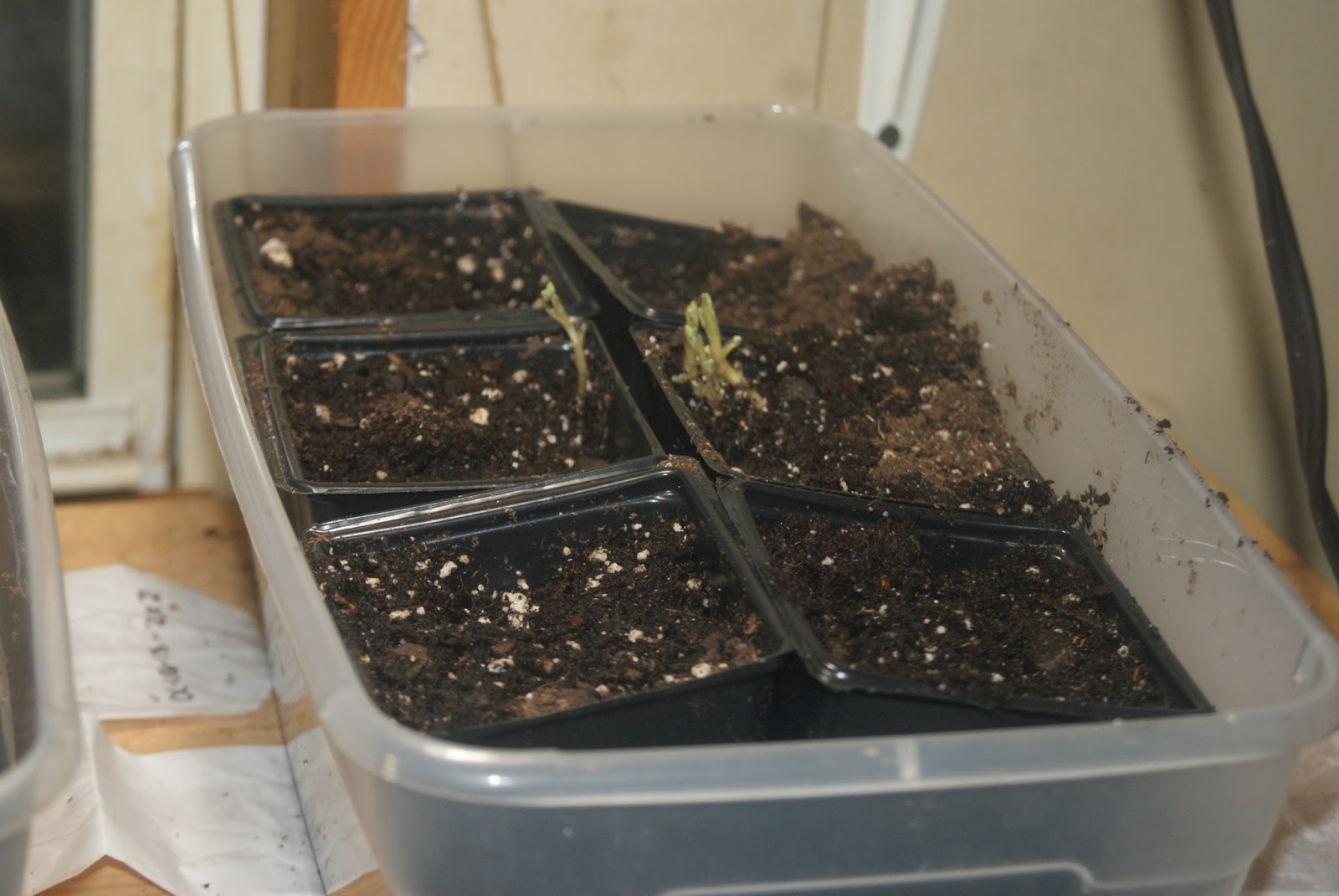
I have looked and so far not found seedling identification for these plants. So I am going to post photos like these. To help others find what there plant will look like.These were planted May 12. 2015. They were up and growing by May 16, 2015


Belezian cranbe sprout

Faro Quinoa (Pedros select)


Camelina Sativa L.Crantz
Friday, May 1, 2015
Planting new to me seeds
1. Pea (Dwarf gray sugar)
red blossoms and subtly reddish-tinted stems and leaves. Shoots are used as garnishes and in salad mixes, Small snow pea pods avg. 2½" long.
sow 1-1 1/2" apart
1/2-1" deep 28" vines may be grown with or without support
---------------------------------------------------------------------
2. Phaseolus coccineus
( Black Coat Scarlet Runner Bean )Pollinated by bumblebees, Soil temperature must be at least 50 Farenheit to germinate seeds. http://www.backyardgardener.com/plantname/pda_53d5.html
--------------------------------------------------------------------
3. BUSHITENO (Grif 1490) cowpea from Sri Lanka
Vigna unguiculata Accession was collected. 1999. Sri Lanka.
Locality: From South Ratnayake, Dambulla.
--------------------------------------------------------------
4. Plum Lemon (Lycopersicon lycopersicum) (PI 64753)
Heirloom Tomato 80 days, indeterminate
Seeds. from Moscow, Russia.Bright canary-yellow 3” fruit looks just like a fresh lemon. They are said to be very "dry" in the meat of the tomato, like paste tomatoes.
Height: 4-6 ft weight one to three ounces
------------------------------------------------------------------------------------------
Genus: Camelina
Family: Brassicaceae (alt. Cruciferae) tribe: Camelineae
Grows 30cm (12 inch) to 120 cm (48 inch) tall
Use
Human food: potential as oil/fat. Exceptionally high levels (up to 45%) of omega-3 fatty acids, which is uncommon in vegetable sources
Animal food: fodder (seeds used in the birdseed
Fuels: potential as petroleum substitute/alcohol
NE2006-1
Developed in: Nebraska, United States (winter variety)
PI 650168
Camelina sativa (L.) Crantz
------------------------------------------------------------------
6. Belenzian Crambe seed
A fine, firm seedbed is required for even germination and vigorous seedling growth
Harvest
Maturity three months. Plants erect, uniform, .6-1m (3.28 feet) tall at maturity. Tolerant of chilling and temperate summers
When crambe fruits approach maturity, the leaves turn yellow and drop; a few days later the fruits and small branches turn straw-colored. When the last seed-bearing branches have turned color, the crop is ready to harvest.
Crambe has orthodox seeds with usually about 4 months dormancy. Once the dormancy is broken, the seeds take 1–2 weeks to germinate at temperatures of 10–20°C. Germination is retarded below 8°C and inhibited below 5°C. Early growth is rapid. Plants reach the 2-leaf stage 6–12 days after germination and the 6-leaf stage after 15–27 days. Inflorescence develop from the 10–13th node upwards. Flowering starts 33–42 days after germination. Crambe is mainly self-pollinated, but about 15% cross-pollination occurs. Leaf growth virtually stops soon after flowering and the onset of anthesis generally coincides with maximum leaf area index and biomass accumulation rate. (Anthesis is the period during which a flower is fully open and functional)
Early senescence of the foliage is a major factor in the low yield capacity of crambe, especially because the surface area of the fruits is small and can intercept only at most 25–35% of incident radiation. Physiological maturity is reached after about 80 days.
 |
| Bean and pea seeds |
Links to more info
http://www.prota4u.org/protav8.asp?en=1&p=Crambe+hispanica+L.
http://uses.plantnet-project.org/en/Crambe_hispanica_%28PROTA%29
http://www.oilseedcrops.org/crambe/
-------------------------------------------------------------------------
faro Quinoa (Pedros select) Bountiful gardens Chenopodium quinoa
PLANTING DEPTH: 1/4" APPROXIMATE GERMINATION DAYS: 3-4
Spacing 12"
Height 4-6'/ DAYS TO MATURITY: 108-120
Related to lambsquarters, beets and spinach.Cook like rice or millet. most quinoa is from the high Andes and won't consistently perform well at lower elevations.
Excessive water will kill it and it is extremely drought tolerant. Quinoa is naturally covered with a bitter tasting soapy substance called saponin.
This coating must be washed away before quinoa can be eaten, This can easily be done in small quantities by putting it in a blender with cool water and running at slow speed. The water is replaced until it no longer foams (is soapy). For larger quantities, seed can be placed in a sealed cloth bag and run through a washing machine (without detergent), until the soapy coating is gone
Subscribe to:
Posts (Atom)